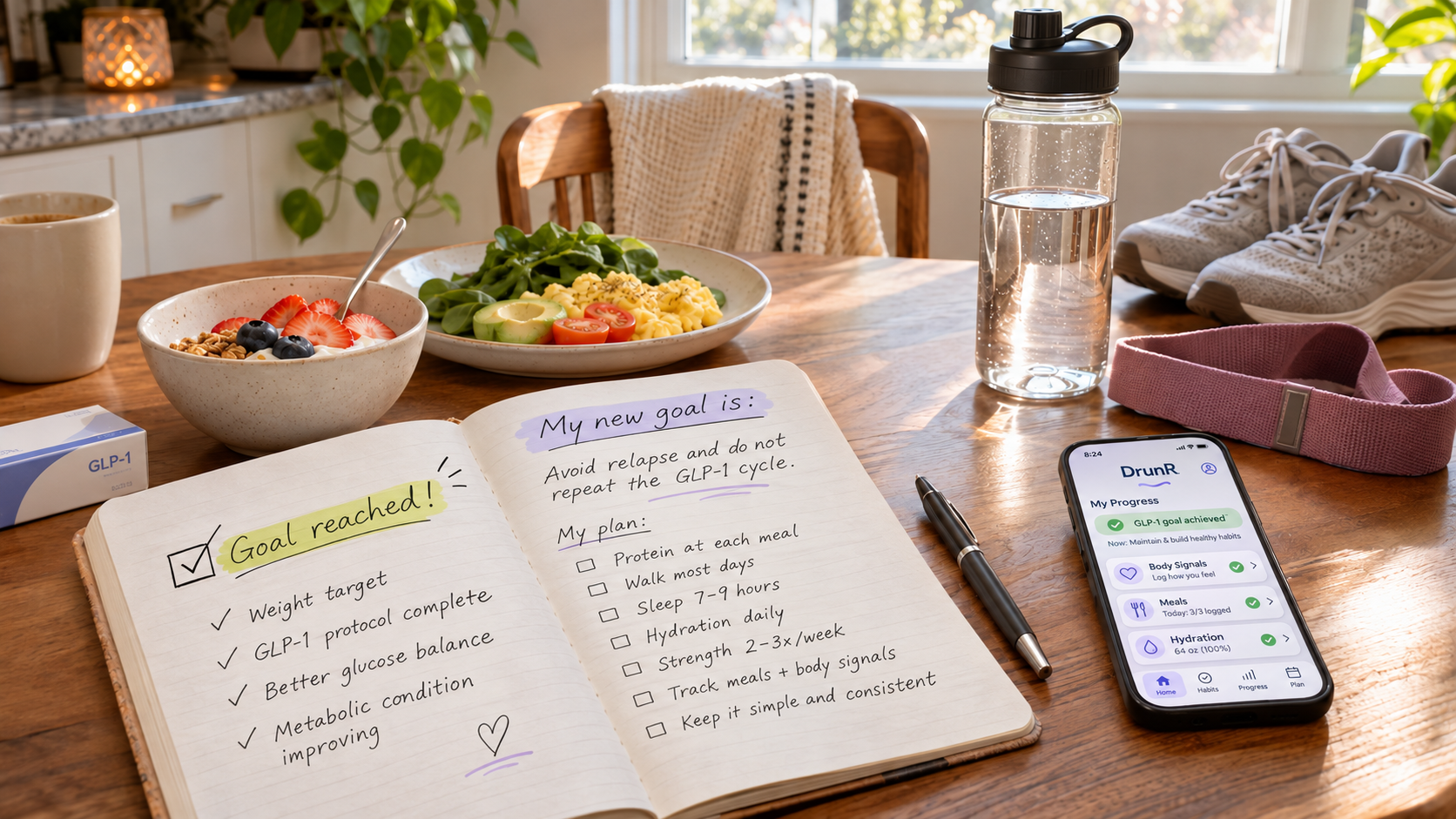
GLP-1 treatment can make some daily decisions easier. That may also create a valuable window to build routines, awareness, and a better understanding of what works for you.
When a GLP-1 starts working, the change can feel surprisingly ordinary. A person who used to negotiate with lunch may notice they are simply less hungry. Portions get smaller. Food may take up less mental space. Decisions that once required a lot of effort can become easier. That is part of the treatment doing its job.
But it also creates an opportunity that I think deserves more attention. What are we building during the period when some of these decisions feel easier?
Food is part of that question, but only part of it. A normal week also includes movement, strength, sleep, hydration, stress, recovery, work, family, symptoms, and all the small routines that influence how someone feels. If appetite is quieter, perhaps there is more room to notice those patterns.
Maybe someone realizes that poor sleep makes it much harder to move the next day. They notice that hydration slips when work gets busy. They start strength training twice a week and, over time, it becomes something they simply do. They learn that on days when appetite is very low, they have to be more intentional about getting enough nutrition rather than assuming eating less is always better.
The point is not to turn every day into a health optimization exercise. It is to help a person understand what seems to work for their own body and their own life.
That idea is consistent with where GLP-1 care itself is heading. A 2025 joint advisory from four major obesity, nutrition, and lifestyle medicine organizations called for support around more than food. It highlighted aerobic activity, strength training, sleep, stress, social connection, and other parts of daily life alongside medical and nutritional management.
This becomes even more important when we remember that treatment plans can change.
Not everyone will stop a GLP-1, nor should stopping be treated as the goal. Obesity is a chronic condition, and medication decisions belong between a patient and their care team. Still, the evidence tells us what can happen when treatment is withdrawn. In the STEP 1 extension, participants regained about two-thirds of the weight they had previously lost within a year after semaglutide was stopped. In SURMOUNT-4, participants switched from tirzepatide to placebo regained an average of 14% of body weight over the following 52 weeks. A recent systematic review found the same general pattern across randomized withdrawal studies.
Those numbers are not evidence that people failed to build enough discipline. If anything, they are a reminder of how much biology still matters.
So this is not an argument that good habits can replace medication. It is an argument against treating the months or years on treatment as a passive period where we watch the scale and wait for the next appointment.
At DrunR, that is part of why we think support has to extend beyond a single meal. Food is one frequent decision, but it lives inside a bigger picture that includes activity, sleep, hydration, recovery, symptoms, behavior, and changing daily circumstances.
Over time, useful support should help someone notice connections between those things. What happened after a difficult night of sleep? What routines survived a stressful week? What changed when activity increased? When did nutrition become harder because appetite dropped too far?
The value is not in producing an endless stream of instructions.
It is in helping people become more familiar with their own patterns while their care team still sets the direction of treatment.
If the medication is working, the scale will naturally get attention. Maybe we should pay just as much attention to what the person is learning while it does.